
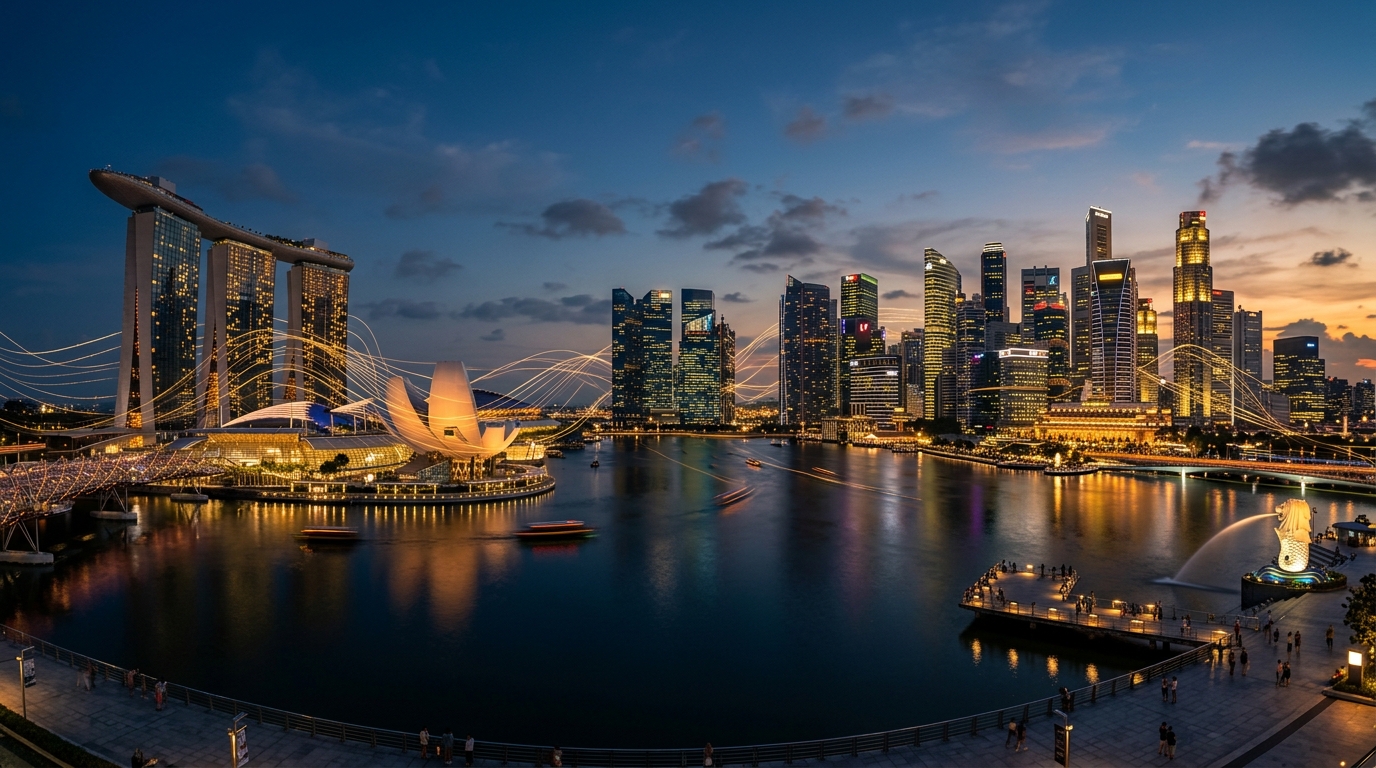


How much does a business website cost in Singapore in 2026?
Published Singapore market surveys and provider packages show website development costs ranging from $300–$1,500 SGD/year for DIY builders (e.g. Wix, Shopify), $800–$3,000 SGD for freelance WordPress templates, $1,800–$6,000 SGD for boutique web engineering firms (custom responsive code and clean technical SEO), and $12,000–$40,000+ SGD for full-service enterprise digital agencies. CROSVA operates on fixed-scope milestone pricing, typically $1,800 to $4,500 SGD for standard 4 to 10-page engineered SME websites.
To uphold rigorous truthfulness, CROSVA strictly prohibits inventing client testimonials, fabricated case statistics, or non-verified commercial metrics. The following items are explicitly flagged for internal owner review:
- CROSVA provides itemized, fixed-milestone quotations based on defined deliverables (page count, UI specifications, integrations) rather than arbitrary packages or non-verifiable discounts.
The 2026 Singapore Website Development Market Reality
If you request quotations from several web design providers in Singapore for the exact same 6-page business website, you are likely to receive figures ranging from $500 to $25,000+ SGD.
This wide price disparity frustrates business owners and managing directors. Why does one provider quote $800 while another quotes $15,000 for what sounds like the same deliverable?
The answer lies in the delivery model, underlying technology stack, and ongoing commercial terms: the difference between an off-the-shelf theme on a hosted SaaS builder versus an engineered, high-performance web asset designed to generate qualified business inquiries, pass Google Core Web Vitals audits, and provide full source code ownership.
The 4 Typical Website Delivery Models in Singapore
Based on published Singapore agency rate cards and public market surveys, commercial offerings generally divide into four distinct delivery categories:
| Delivery Model | Typical Market Range (SGD) | Underlying Architecture | Strengths & Trade-offs |
|---|---|---|---|
| 1. Self-Service SaaS Builders (Wix, Squarespace, Shopify) | $300 – $1,500 SGD / year (recurring subscription) | Proprietary cloud platform, visual drag-and-drop builder, integrated hosting. | Strengths: Low initial cost, fast non-technical setup, automated basic SEO tags and SSL. Trade-offs: Compounding recurring SaaS subscription fees; source code cannot be exported or independently hosted; heavier script bundles can impact mobile Core Web Vitals. |
| 2. Freelance WordPress / Pre-Made Themes | $800 – $3,000 SGD one-off | Commercial PHP theme, drag-and-drop page builder plugins (Elementor, Divi). | Strengths: Affordable entry point, flexible blogging features. Trade-offs: Vulnerable to plugin security exploits and update breaks; recurring commercial plugin renewal costs; speed optimization is rarely included. |
| 3. Boutique Web Engineering (CROSVA Model) | $1,800 – $6,000 SGD fixed milestone | Modern component architecture (React, TypeScript, clean HTML5/CSS), bespoke UI styling, Core Web Vitals targets, built-in Technical SEO. | Strengths: High mobile speed, 100% custom source code handover, zero proprietary lock-in, direct cloud infrastructure control. Best for: Startups, SMEs, corporate services, and expanding businesses requiring high digital credibility. |
| 4. Full-Service Enterprise Digital Agency | $12,000 – $40,000+ SGD | Cross-functional team (Account Directors, Art Directors, Brand Strategists, Multiple Developers), custom enterprise CMS. | Strengths: Comprehensive brand strategy, qualitative user research, extensive design workshops, enterprise compliance sign-offs. Trade-offs: High minimum project fees and longer delivery timelines (3 to 6 months) that may not align with lean SME budgets. |
The 7 Primary Factors That Drive Website Development Costs
When evaluating a quotation or planning your digital budget, understand that costs are determined by the following concrete engineering and content dimensions:
1. Number of Unique Page Templates & Layouts
A simple 4-page website (Home, About, Services, Contact) requires fewer architectural layouts than an 18-page website with individual service landing pages, case study deep-dives, a dynamic careers portal, and multi-step intake forms. The more distinct layouts required, the more design and testing time is needed.
2. Bespoke UI/UX Design vs. Cookie-Cutter Themes
Cheap providers take an existing template designed for thousands of other companies and change the logo and text. Professional engineering firms design custom visual hierarchies tailored to your brand, using crisp typography, micro-interactions, responsive grids, and structured visual storytelling that builds immediate trust with enterprise buyers.
3. Front-End Speed & Core Web Vitals Optimization
Google prioritizes websites that load in under 2.5 seconds (Largest Contentful Paint) and maintain layout stability (Cumulative Layout Shift < 0.1). Achieving this requires meticulous code-splitting, modern image formatting (WebP/AVIF), CSS optimization, and lightweight scripts. Agencies charging $500 rarely perform speed optimization, leaving sites with sluggish 5+ second load times that cost you customers.
4. Built-In Technical SEO & Structured Data
A website is useless if prospective customers in Singapore cannot discover it. Proper technical SEO includes semantic HTML5 tag hierarchy, unique meta descriptions, OpenGraph social share cards, XML sitemaps, robots.txt directives, and Schema.org JSON-LD structured data (Organization, LocalBusiness, and Service schemas) so search engines understand your entity.
5. Interactive Functionality & Lead Intake Workflows
Standard contact forms are simple to build. However, if your website requires multi-step quotation calculators, dynamic resume parsers with PDPA consent storage, automated WhatsApp inquiry routing, or direct CRM/Slack webhook integrations, engineering hours increase accordingly.
6. Copywriting & Commercial Positioning
If your internal team provides finalized, polished copy, you save substantial fees. If the agency must interview your founders, research competitor messaging, and write professional commercial copy from scratch, expect to invest an additional $800 to $2,500 SGD depending on page count.
7. Asset Preparation & Photography
Using real, high-resolution photography of your Singapore team, office, and operations dramatically elevates commercial credibility over generic American stock photos. Curating, licensing, compressing, and sizing visual assets properly requires specialized production time.
5 Hidden Costs Singapore SMEs Often Overlook
Many businesses that choose an "ultra-cheap" $500 website end up spending thousands more over the subsequent 18 months. Be vigilant regarding these common vendor traps:
1. Proprietary CMS Lock-In & Ransom Hosting
Some agencies build your website on their own private platform or hold administrative access hostage. If you decide to leave, they charge steep "exit fees" or tell you the website cannot be transferred elsewhere, forcing you to rebuild from scratch.
2. Plugin & Theme License Renewal Surprises
WordPress template builders often rely on 15–25 paid commercial plugins (e.g. form builders, slider plugins, security add-ons). After Year 1, license renewals expire, forms stop submitting, and you receive unexpected annual software bills of $400–$900 USD.
3. Mandatory "Maintenance" Retainers for Zero Work
Agencies frequently require clients to sign $200–$500/month "maintenance agreements" that consist of nothing more than clicking update on a WordPress dashboard. Clean, modern codebases built without bloated CMS plugins require virtually zero routine maintenance.
4. Domain & Corporate Email Markups
A .com.sg or .sg domain costs roughly $40 to $60 SGD/year directly from accredited Singapore registrars. Some agencies mark this up by 300% or register the domain under the agency's name rather than your company's ACRA entity, creating severe legal ownership risks.
5. The "Revision Penalty" Trap
Vaguely defined scopes of work often include clauses like "up to 2 minor revisions." The moment you request a change to text or layout, the vendor invoices steep hourly change fees ($150–$250/hour), doubling the original cost of the project.
Checklist: How to Evaluate a Singapore Web Development Proposal
Before signing an agreement or transferring a deposit, insist on clear answers to these 6 questions:
- Custom Code Ownership: Will our business receive full ownership of all custom bespoke source code, styles, and custom visual assets upon final milestone payment? (Underlying open-source frameworks like React and third-party font/stock licenses remain under their respective terms).
- Performance Targets: What is the targeted Core Web Vitals score in standardized laboratory audits (e.g. LCP < 2.5s, CLS < 0.1), and what dependencies (such as client-installed third-party tracking tags or uncompressed images) could impact real-world field metrics?
- Technical SEO Inclusions: Does the quote include semantic HTML5 hierarchy, Schema.org JSON-LD structured data, unique metadata per page, OpenGraph social cards, and XML sitemaps, or is technical SEO treated as an expensive separate add-on?
- Hosting Independence: Can we host the website on our own independent cloud infrastructure (Vercel, AWS, Cloudflare, Netlify) with zero ongoing agency markups or platform lock-in?
- Fixed-Scope Milestones: Does the contract clearly define every included page, template layout, and feature with milestone-based sign-offs so costs cannot spiral unexpectedly?
- Singapore PDPA Compliance: Are enquiry forms, consent checkboxes, and data handling workflows structured in accordance with the Singapore Personal Data Protection Act?
Looking for high-performance, affordable website development in Singapore?
CROSVA delivers modern, engineered business websites for Singapore SMEs and startups. We operate on fixed-scope milestone pricing, targeting green Core Web Vitals, built-in technical SEO, and complete bespoke source code ownership.
Explore CROSVA Affordable Web DevelopmentHuman, Technical & Operational Limitations
Responsible adoption requires recognizing where generative systems fail or introduce friction: